
Key Takeaways
- Low noise and low current consumption are design requirements in medical thermal management, not optional comfort features.
- Patient monitors, breathing-assist devices, ultrasound carts, and surgical tools all face the same constraint: cooling must stay quiet, efficient, and reliable near people.
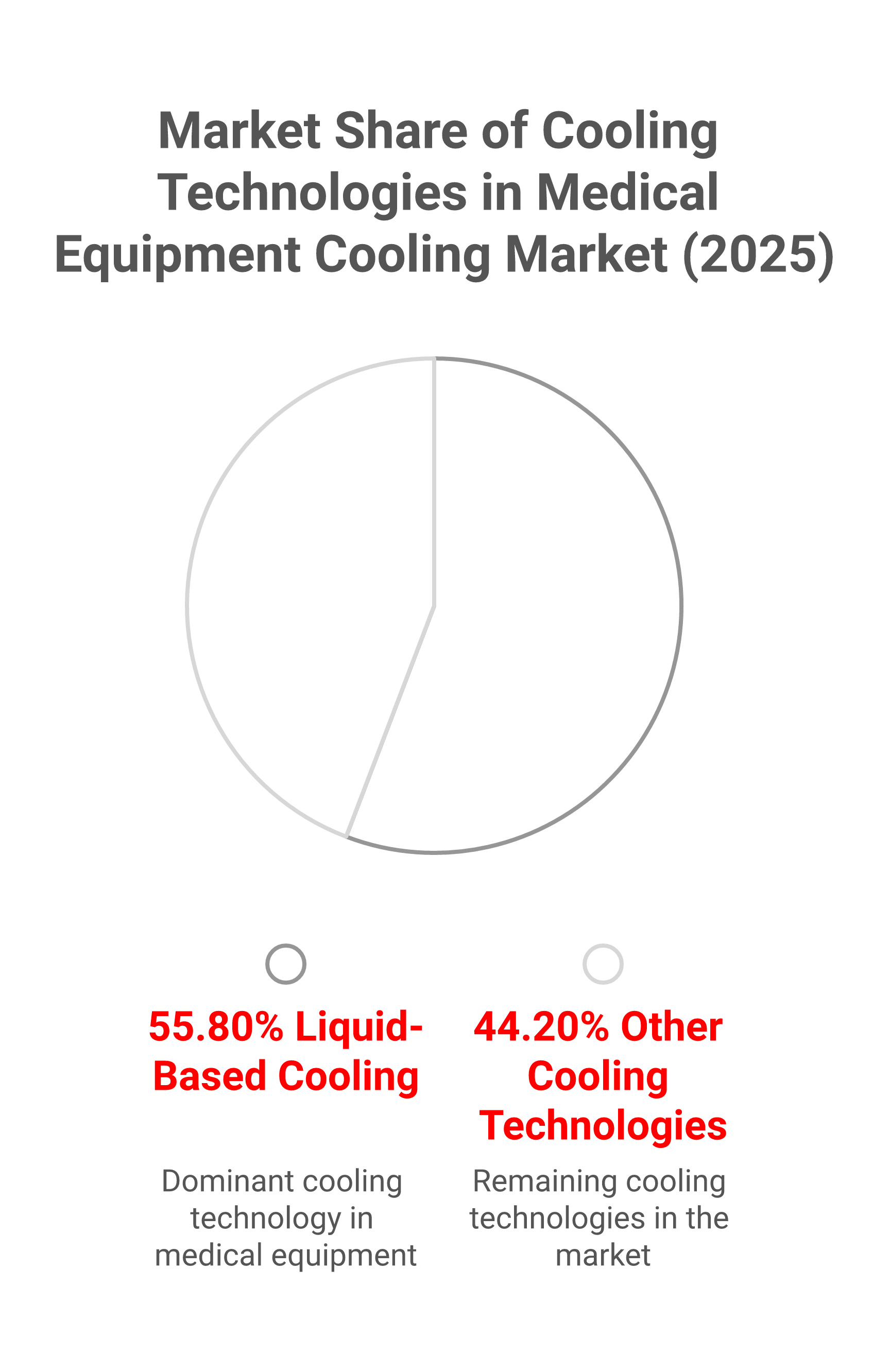
- Market data backs the shift. Fact.MR values the medical equipment cooling market at USD 474.1 million in 2025 and projects USD 745.444 million by 2036, with liquid-based cooling holding a 55.8% share in 2025.Fact.MR medical equipment cooling market
- PWM control matters because it lets engineers tune airflow and acoustic output without wasting power.
- The strongest medical thermal designs treat sound, current draw, and compliance as one specification, not three separate checkboxes.
Introduction
Medical thermal management fails fast when noise and current draw are treated as afterthoughts. In patient-facing equipment, a loud fan or a power-hungry blower does more than irritate users. It can disturb care, reduce battery life, and signal a thermal design that was sized too late.
The better question is why these two constraints keep showing up together. Quiet operation protects the patient environment, while low current consumption protects runtime, power budget, and internal heat load. YS Tech USA builds around both requirements in medical applications such as patient monitoring, breathing assist, ultrasound, surgical tools, and test equipment.
That combination is no accident. The medical cooling market is growing, the loads are rising, and equipment makers are being pushed toward tighter temperature control in smaller enclosures. The result is simple. Cooling has to work harder while drawing less power and making less noise.
Table of Contents
- Key Takeaways
- Introduction
- Where Low Noise And Low Current Consumption Matter Most
- What These Requirements Actually Change In A Medical Design
- Why The Conventional View Leaves Risk On The Table
- The Contrarian Answer For Medical Thermal Management
- Keeping Medical Cooling Quiet, Efficient, And Reliable
- FAQ
- About YS Tech USA
Where Low Noise And Low Current Consumption Matter Most
The Patient-facing Environment Is Where the Requirements Become Non-negotiable.
The place where noise and current draw matter most is close to the patient, the clinician, and the diagnostic electronics. Patient monitors, breathing-assist systems, ultrasound carts, UV and laser tools, and portable test equipment all sit in that space, and each one has different thermal loads but the same acoustic limit. YS Tech USA calls out this medical set directly, which is consistent with the company's medical focus on low current consumption, low noise, and PWM design and integration.
The market data points in the same direction. Fact.MR reports that the medical equipment cooling market is valued at USD 474.1 million in 2025 and projected to reach USD 745.444 million by 2036 at a 4.2% CAGR.Fact.MR medical equipment cooling market That growth is tied to imaging systems, laboratory instruments, and other equipment that cannot afford thermal drift or avoidable acoustic output.
The Quiet Spec Often Decides Whether a Device Feels Clinical or Disruptive.
A patient monitor that hums through a night shift changes the room. A breathing-assist unit that pulls more current than expected shortens battery runtime and pushes heat into a compact enclosure. Those are not theoretical concerns. They show up in how the device is used every day, and they show up in the feedback from nurses, technicians, and biomedical teams.
A market voice captured in a LinkedIn post put it plainly: "a patient monitor needs low current consumption and quiet operation."How 2026 market trends transform thermal management That is exactly the kind of field-level statement engineers should listen to, because it comes from use, not slideware.
What These Requirements Actually Change In A Medical Design
Low Noise Changes the Thermal Architecture, Not Just the Fan Choice.
If noise is part of the spec, the enclosure, airflow path, heatsink geometry, and control strategy all change. A fan selected only for free-air flow often ends up over-spun in the final assembly, which raises acoustic output and can create tonal noise that patients notice immediately. PWM control is the practical answer because it lets the system stay quiet at partial load and respond only when temperature demands it.
Low current consumption changes the power budget in the same way. Every extra watt spent on cooling becomes heat inside the device, and every milliamp matters more in portable or semi-portable medical equipment. A lower-current fan reduces load on the power supply and leaves more headroom for sensors, displays, pumps, and radios.
Market Scale Shows Why This Design Pressure Keeps Rising.
BCC Research said the broader thermal management technologies market is projected to grow from $19.8 billion in 2025 to $30 billion by 2030, at an 8.6% CAGR, with healthcare named among the major application areas.BCC Research thermal management technologies market That matters because medical devices are not staying static. They are getting more connected, more compact, and more power constrained.
Fact.MR also reports that liquid-based cooling holds a 55.8% share in 2025, which is a strong signal that the market is favoring thermal solutions that can manage higher loads and tighter operating windows.Fact.MR medical equipment cooling market Even when a project uses air movement instead of liquid, the design expectation is the same. The cooling solution has to be efficient, controlled, and fit for a sensitive environment.
Why The Conventional View Leaves Risk On The Table
Many Teams Still Treat Acoustic Noise as a Comfort Issue and Current Draw as a Power Note.
That view is too narrow for medical equipment. Noise is not only about user comfort. It can affect how a patient experiences the device, especially in monitoring and bedside care, and it can signal a fan that is being driven harder than the thermal system needs. High current draw is not only a battery issue. It also increases internal losses and can force a bigger power stage, a larger battery pack, or more enclosure heat.
The result is a familiar failure mode. The device passes a bench test, but the final build runs louder than expected, runs hotter than expected, or drains power faster than the system budget allows. I have seen that pattern more than once when the airflow path was treated as secondary to the electronics layout. The fix was usually not a bigger fan. It was a better thermal design.
The Corrected View Is More Specific.
In medical thermal management, low noise and low current consumption are part of device performance, not just cooling performance. YS Tech USA's medical offering reflects that directly with low noise, low current consumption, and PWM design and integration built into the solution set. That is the right response for patient monitoring, breathing assist, ultrasound, and surgical tools, where acoustic output and electrical load affect the product every time it is used.
The Contrarian Answer For Medical Thermal Management
Where the real requirement sits
The conventional answer says quiet fans matter mainly in patient rooms and portable devices. That is incomplete. Noise matters anywhere the device is near people, near recordings, or near a sensitive workflow, which includes bedside monitoring, imaging support carts, lab instruments, and procedure rooms. The corrected answer is that acoustics belong in the system spec from the first thermal review, and that is where YS Tech USA's medical design support fits, because the company builds around quiet operation, low current consumption, and application-specific integration.
What the spec really controls
Most teams believe low noise means selecting a lower-speed fan and moving on. That is only part of the picture. The real control points are PWM strategy, enclosure impedance, heatsink selection, bearing choice, and how the airflow path is built into the device. YS Tech USA's mix of fans, blowers, and heatsinks gives NPI teams the freedom to tune those variables together instead of forcing a single catalog part to carry the load.
Why the correction pays off
The common view says the point is patient comfort. That is true, but incomplete. The full reason is that quiet, low-current cooling protects runtime, limits parasitic heat, supports compliance work, and lowers the chance of a late re-spin. The company's stated medical strengths, including design integrity for long life, compliance data on hand, and customer service in the USA, match that reality and give engineers a path from specification to production without hand-waving.
Keeping Medical Cooling Quiet, Efficient, And Reliable
Low noise and low current consumption are the same design decision seen from two angles. If you get one wrong, the other usually suffers too. That is why the best medical thermal designs use controlled airflow, PWM integration, and properly matched thermal hardware instead of overdriven parts that only look adequate on paper.
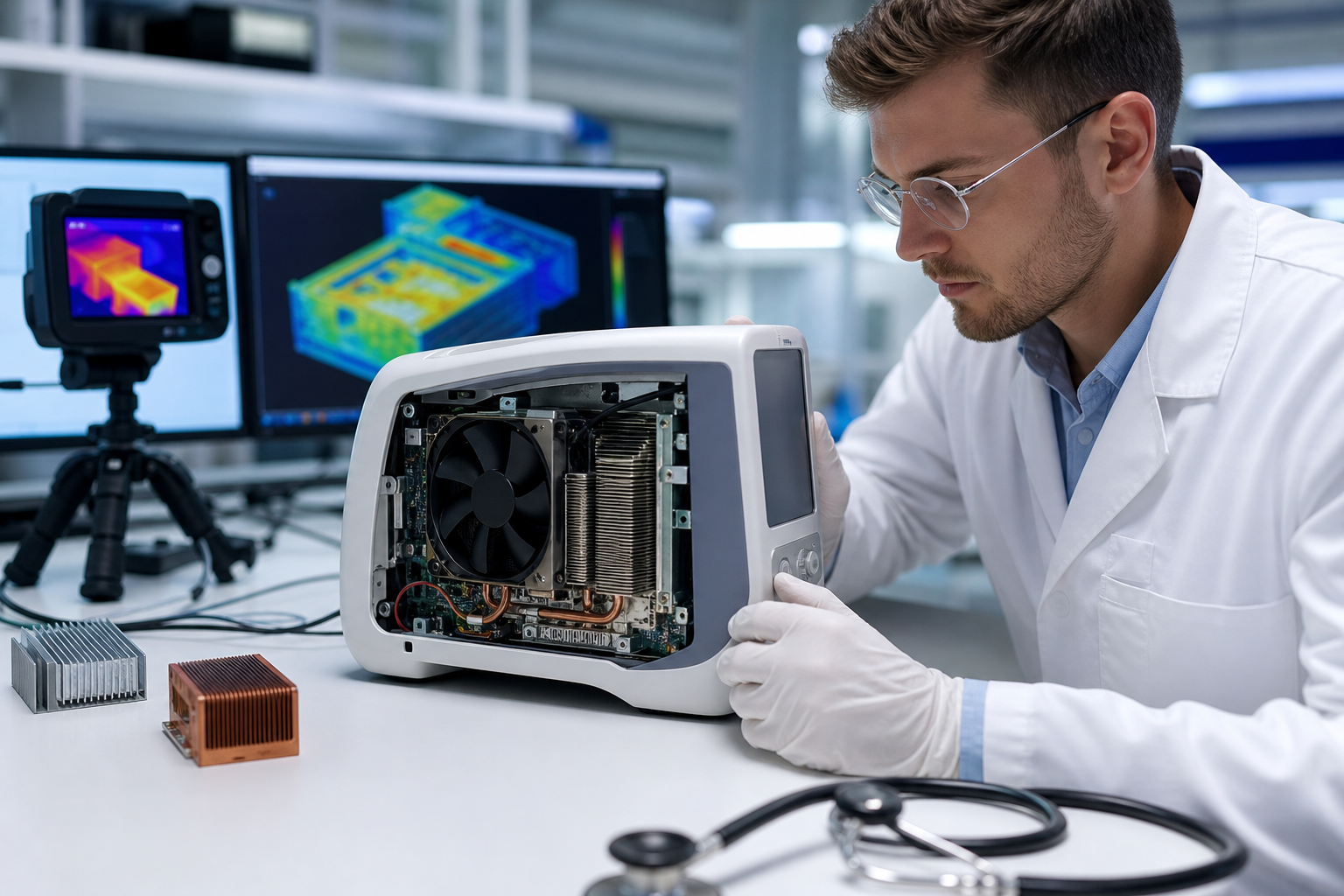
A practical example is a patient monitor with limited enclosure volume and strict acoustic expectations. A fan that looks sufficient in free-air testing may fail once filters, grilles, and internal obstructions are added. A better approach is to start with thermal simulation, test the airflow path, and select a fan or blower that meets the temperature target without forcing the unit into a high-RPM noise band.
YS Tech USA's 2026 thermal design trends overview points in that same direction, with custom thermal design, application analysis, and faster NPI support framed as part of the solution. For medical devices, that approach reduces guesswork and gives teams a realistic path to quieter, lower-power products that still hold junction temperature in range.
Why Quiet, Low-Power Cooling Is Now A Medical Design Baseline
The short answer is that medical equipment is used too close to people to tolerate careless cooling. A louder fan, a higher current draw, or a poorly matched thermal path changes the product experience and raises design risk. When the medical market is already moving toward tighter temperature tolerances, higher power densities, and more portable systems, the cooling spec has to pull its weight.
The engineers who treat noise and current as core requirements usually get there faster. They spend less time chasing re-spins, less time fighting battery complaints, and less time explaining why a monitor sounded louder in the clinic than it did in the lab. That is the point of a disciplined thermal partner, and it is where YS Tech USA is built to help.
FAQ
Q: Why does low noise matter so much in medical equipment?
A: Low noise matters because medical devices often operate beside patients and clinicians. Acoustic output affects comfort, attention, and the perceived quality of the equipment. In some settings, a noisy fan can also distract staff during monitoring or procedures. Quiet cooling is part of the product experience, not just a mechanical detail.
Q: Why is low current consumption tied to thermal management?
A: Cooling hardware consumes power, and that power becomes heat inside the enclosure. Lower current draw helps protect battery runtime and reduces the burden on the power supply. It also leaves more electrical headroom for the rest of the device. In compact medical systems, that can make the difference between a stable design and a stressed one.
Q: Where does PWM fit into medical cooling design?
A: PWM lets engineers control fan speed in response to actual thermal demand. That reduces unnecessary noise at light load and saves power when full airflow is not needed. It also gives better control across different use conditions, which is useful in monitors, breathing-assist units, and imaging support equipment. Proper PWM integration is one of the clearest ways to balance acoustics and performance.
Q: What medical applications are most sensitive to noise and current draw?
A: Patient monitoring, patient comfort systems, breathing assist, ultrasound, UV and laser equipment, surgical tools, and test equipment all face those limits. These devices are often used near people and inside compact enclosures. They also tend to have strict reliability and compliance expectations. That combination makes the cooling choice especially important.
Q: How does a thermal partner help reduce re-spins?
A: A thermal partner helps by matching airflow, pressure, and heatsink performance to the real enclosure. That reduces the chance of selecting a part that is too loud, too power hungry, or too weak once the device is fully built. It also shortens the path from prototype to production because the thermal design is validated earlier. In medical programs, that saves time and lowers risk.
About YS Tech USA
YS Tech USA is a premier designer and manufacturer of thermal solutions, specializing in low noise, high-performance DC axial fans, blowers, and heat sink technologies. Located in Huntington Beach, California, we deliver reliable, high-quality products for demanding applications across various industries.
At YS Tech USA, we offer the best of both worlds: the capabilities of a large company with the personalized service of a small one. We collaborate closely with our customers to understand their specific thermal needs and provide customized solutions tailored to their unique requirements.
Our extensive product range includes both modified standard and custom solutions, designed to tackle a wide array of thermal challenges. Whether you need a high-performance fan for a new project or a custom heat sink for an existing application, our team is ready to assist.
With over three decades of industry experience, YS Tech USA has a proven track record of delivering innovative and effective thermal solutions. Contact us today to discover how you can help you address your thermal control challenges.
Author
Charlie Taylor: Charlie is a seasoned industry executive with a demonstrated history of working in the electronics manufacturing industry supporting engineers and buyers with ideas and technical support for fans, blowers and heat sinks.