Key Takeaways
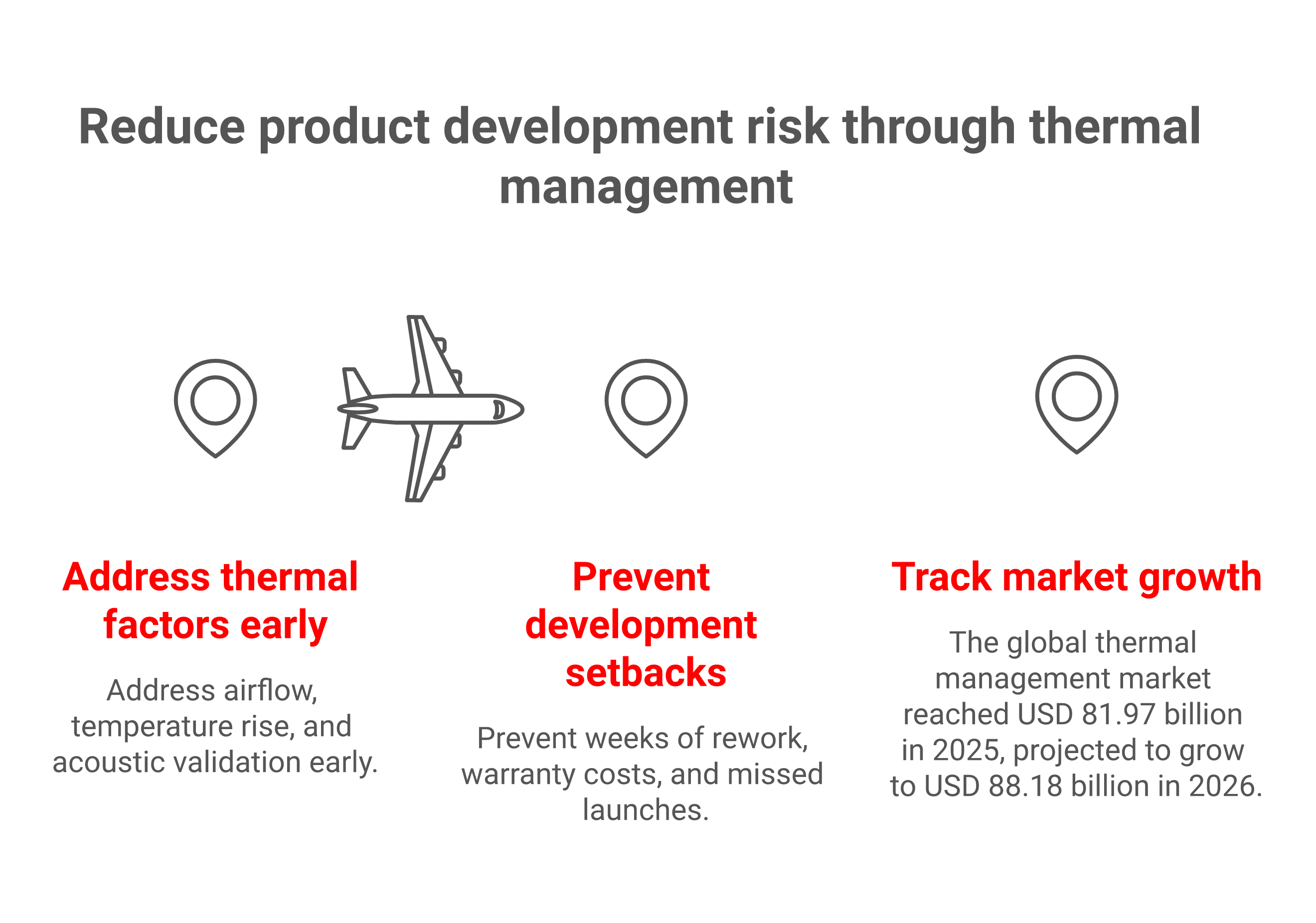
- Better thermal management lowers development risk by moving airflow, temperature rise, and acoustic validation earlier in the spec cycle.
- Late cooling fixes can turn into weeks of rework, surprise warranty expense, and missed launch windows.
- Simulation-led design helps mechanical and thermal teams test fit, performance, and manufacturability before the first enclosure lock.
- Application-specific fans, blowers, and heatsinks reduce the need for enclosure compromises and late design changes.
- Programs in automotive, medical, industrial, telecom, lighting, and EV charging face the same pattern, heat failures usually show up after thermal decisions were made too late.
Introduction
Yes. Better thermal management from YS Tech USA can reduce product development risk because it cuts the chances of late-stage redesign, thermal failure, acoustic surprises, and compliance misses. That is especially true when thermal decisions are made before the enclosure is frozen, not after the prototype exposes a hot spot that should have been modeled on day one.
Most product teams do not lose schedule because they lacked a fan. They lose time because the fan, heatsink, connector, airflow path, and noise target were not treated as one engineering problem. A recent Siemens article on 3D ICs says thermal issues have become the primary constraint shaping design decisions, and that changes made late in the cycle carry significant cost and risk. Diabatix also reports that air architectures stay efficient only up to about 20 kW per rack, while performance and PUE begin to deteriorate sharply as densities move toward 40 to 80 kW, which is why thermal decisions now affect the whole program, not just the component.
The stronger case is simple. Thermal management is now a front-end design input. That is the version that names the hard questions and the objections behind them.
Table of Contents
- Why thermal risk shows up so late
- Where the cost of failure appears first
- How simulation changes the risk profile
- Which applications carry the most pressure
- Why the right cooling architecture matters
- What asking the hard questions changes
Why Thermal Risk Shows Up So Late
Thermal risk shows up late because many teams still treat cooling as a selection task instead of a system design task. Once the enclosure, PCB stack, noise target, and mounting points are fixed, the cooling choice has far less room to work.
The market is already telling the same story. Fortune Business Insights says the global thermal management system market reached USD 81.97 billion in 2025 and is projected to reach USD 88.18 billion in 2026, with Asia Pacific holding 49.40% of the market in 2025. YS Tech USA's 2026 market-trends article also cites Persistence Market Research projecting the US thermal management technologies market at US$5.8 billion in 2026, which is a large enough base to show that this is now a core engineering category, not a specialty add-on. A related YS Tech USA article on custom thermal design trends for 2026 makes the same point: teams are moving thermal decisions earlier because late changes cost real money.
The objection is easy to understand. Many mechanical teams already have a cooling concept, and they think the risk is low if air is moving and the part fits. That logic only holds until the first thermal test, where a 4 dBA noise miss, a 6 degree junction rise, or a bad pressure curve creates a new design loop.
Where The Cost Of Failure Appears First
The first cost is usually schedule. The second is rework. The third is credibility with the customer who expected the prototype to be close enough for pilot build.
YS Tech USA's own market commentary says thermal decisions made late in development cost weeks of rework, surprise warranty expenses, and customer frustration. That language is blunt because the failure mode is familiar. I have seen a design lose a full program review because airflow looked acceptable in free air but fell apart once cable bundles, filters, and mounting ribs were added. The enclosure passed CAD review and failed on the bench.
The objection is that teams already budget for some iteration. That is fair, because no first build is perfect. But a planned adjustment is not the same as a thermal rescue, and the difference shows up when a launch date stays fixed while the cooling system keeps changing.
How Simulation Changes The Risk Profile
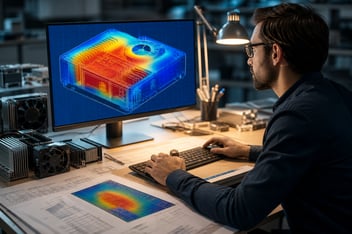
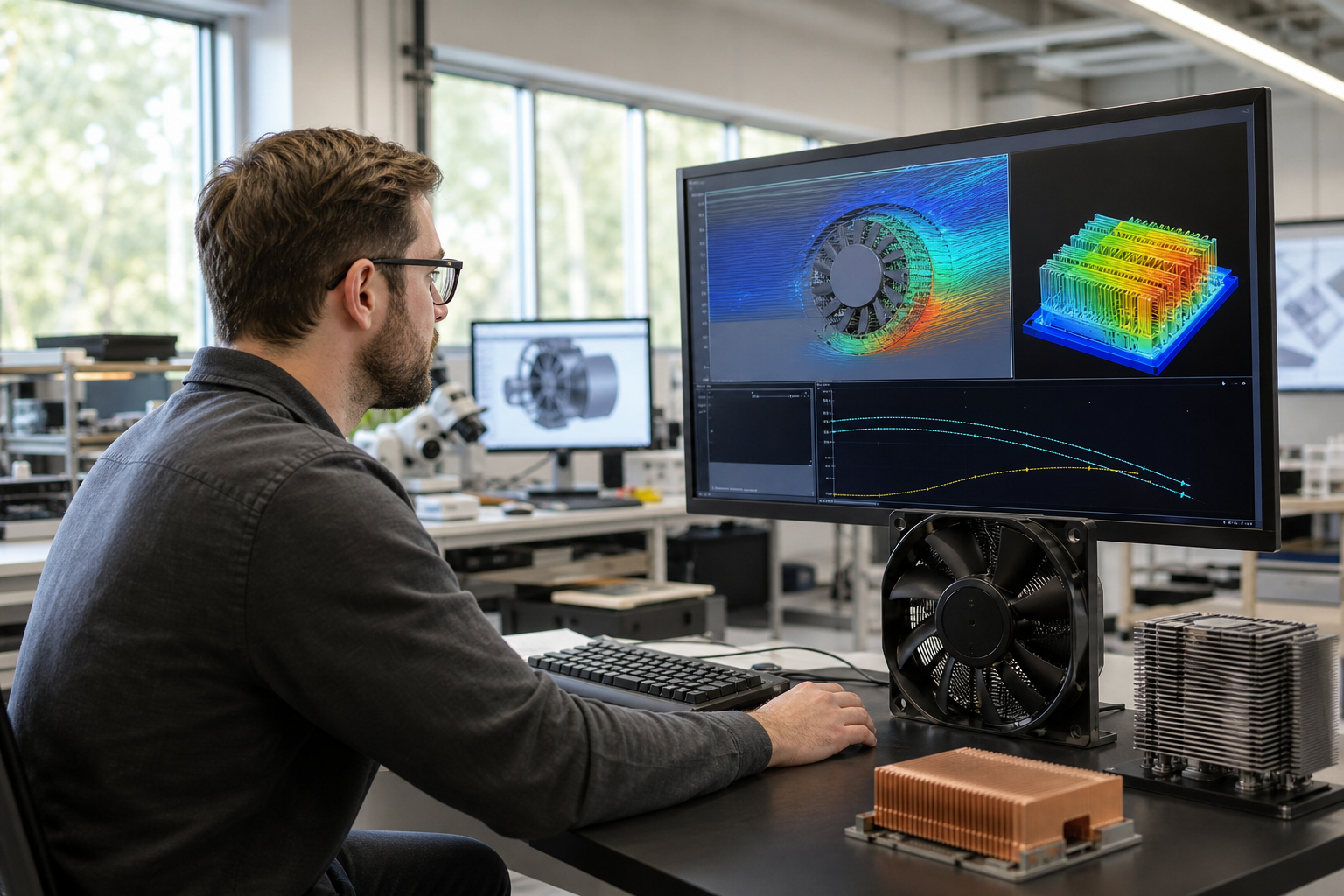
Simulation reduces risk when it is tied to the real enclosure, the real fan curve, and the real thermal load. CFD, FEA, and thermal simulation do not remove physical testing, but they reduce the number of dead-end prototypes.
Siemens says in its January 26, 2026 article on 3D ICs that thermal assumptions from 2D designs often break down late in the cycle, when changes are expensive and risky. That is exactly why front-loaded thermal analysis matters in electronics, EV charging, lighting, and telecom. In data center work, Diabatix notes that traditional air cooling can remain effective up to around 20 kW per rack, but AI and accelerated compute racks are increasingly designed for 50 to 100 kW and beyond, which pushes teams toward direct-to-chip or immersion liquid cooling. The lesson transfers cleanly: once thermal density rises, the penalty for guessing gets steep.
The objection is that simulation can still be wrong if the inputs are wrong. True. A weak model produces a weak answer. But a good application engineer can usually narrow the field fast, and that is why design support from a thermal partner matters more than a catalog part with a pretty curve.
Which Applications Carry The Most Pressure
High-heat, high-reliability programs carry the most pressure because they fail in ways that are expensive to correct. Automotive infotainment, LED headlights, patient monitoring, industrial motor controls, telecom racks, and EV battery cooling all punish weak thermal assumptions.
The Journal of Energy Storage review says effective battery thermal management systems are crucial for EV performance and range, and that BTMS development requires knowledge across electrochemistry, geometry, cooling methods, control techniques, and optimization algorithms. It also lists the main cooling paths teams compare, including air cooling, heat pipe cooling, indirect liquid cooling, phase change materials, single and two-phase immersion cooling, and hybrid systems. That breadth matters because it proves the solution is rarely generic. It has to fit the load, the enclosure, the service plan, and the manufacturing flow.
The objection is that many of these programs can still use standard components. Sometimes they can. Yet standard parts often force compromises in air path, mounting, protection level, or noise, and those compromises usually show up during qualification.
Why The Right Cooling Architecture Matters
The right cooling architecture reduces risk because it matches the thermal load, acoustic target, and environment before tooling is locked. That is where form, fit, and function flexibility matter more than a one-size-fits-all fan.
YS Tech USA builds around AC, DC, and EC fans, centrifugal blowers with EC motor technology, and high-performance heatsinks, which gives NPI teams more room to match the application instead of forcing the application to match the part. In automotive, that can mean 85, 90, or 105C operating targets, moisture protection, PWM support, specialty connectors, and CAN or LIN bus support. In industrial and medical work, it can mean IP43 to IP68 options, low current draw, low noise, sealed connectors, and validation data already available for review.
The objection is that a customized thermal part sounds slower than a catalog purchase. It can be, if the supplier is only selling parts. It is faster when the supplier is also helping you remove re-spins, reduce uncertainty, and narrow the design space before the prototype locks the program into expensive corrections.
What Asking The Hard Questions Changes
Asking the hard questions produces trust because it exposes the risks before the customer, the test lab, or the field does. That is why engineering partnership matters as much as the hardware itself.
A good thermal partner does more than ship a fan. It checks pressure curve fit, acoustic headroom, PWM behavior, connector strategy, ingress protection, and manufacturability in the same conversation. YS Tech USA's local engineering support and global production model matter here because the design can be reviewed quickly, then built in a way that fits the program's timing, volume, and compliance demands. The market-trends view on worldwide production and US engineering describes the same pressure on modern thermal programs: global scale matters, but local engineering keeps the decisions fast.
The objection is that all of this still sounds like extra effort up front. It is extra effort. It also prevents the much larger effort of a re-spin, a late compliance miss, or a product that ships hot and noisy.
The Cooler Program Is The Safer Program
When thermal decisions are made early, the development program gets calmer. The prototype is closer to spec, the qualification path is cleaner, and the field risk drops because the product was designed around heat instead of patched around it.
That is the point of application-specific thermal management. It reduces surprises, preserves schedule, and keeps the team from paying for the same mistake twice. If your next program has a tight acoustic target, a harsh environment, or a launch window you cannot move, the safer question is not whether you need cooling. It is whether you can afford to choose it late.
FAQ
Q: Does better thermal management really reduce development risk?
A: Yes, because it reduces late redesign, qualification churn, and field failures. Thermal issues often surface after enclosure geometry, PCB layout, and acoustic targets are already fixed, which makes them expensive to correct. The risk falls when cooling is part of the spec process instead of a late procurement task. In practice, that means fewer re-spins and fewer surprises at test.
Q: Why not just pick a larger fan or heatsink?
A: Size alone does not solve airflow impedance, noise limits, or mounting constraints. A larger part can still miss the thermal target if the static pressure curve does not fit the enclosure. It can also create packaging problems or raise acoustic noise above the product limit. The safer choice is the part that matches the full operating condition.
Q: Where do simulation and testing fit in the process?
A: They should sit near the start, not after the first failed prototype. Simulation helps narrow the design space before hardware is frozen, while testing confirms the assumptions under real loads and real airflow paths. That sequence lowers the odds of chasing a problem after tooling or PCB layout has already been locked. It also gives the team a clearer path to qualification.
Q: Which industries feel the risk most sharply?
A: Automotive, EV charging, medical, industrial, lighting, telecom, and renewable energy all feel it because thermal failure affects reliability, compliance, and customer acceptance. In medical and automotive programs, noise and temperature can be as important as airflow. In telecom and industrial systems, heat and dirt often arrive together, which makes ingress protection and reliability data part of the design decision. Battery cooling and inverter work add another layer because performance and safety are tied to heat removal.
Q: What should a mechanical engineer ask before choosing a thermal part?
A: Ask whether the part fits the real load, the real enclosure, and the real manufacturing plan. Then check whether the supplier can provide airflow data, pressure curves, validation support, and options for connectors or protection ratings. Those questions expose whether the solution is a catalog fit or a program fit. A better answer usually comes from a partner that can modify a base design instead of forcing a full custom tool from day one.
Q: What makes YS Tech USA different for NPI teams?
A: The value is in the mix of engineering support and manufacturing range. The company offers fans, blowers, EC motors, and heatsinks, so the thermal system can be built from one source instead of stitched together across multiple vendors. That makes it easier to keep form, fit, function, and timing aligned during NPI. It also helps when a program needs US-based engineering with production support across regions.
About YS Tech USA
YS Tech USA is a premier designer and manufacturer of thermal solutions, specializing in low noise, high-performance DC axial fans, blowers, and heat sink technologies. Located in Huntington Beach, California, we deliver reliable, high-quality products for demanding applications across various industries.
At YS Tech USA, we offer the best of both worlds: the capabilities of a large company with the personalized service of a small one. We collaborate closely with our customers to understand their specific thermal needs and provide customized solutions tailored to their unique requirements.
Our extensive product range includes both modified standard and custom solutions, designed to tackle a wide array of thermal challenges. Whether you need a high-performance fan for a new project or a custom heat sink for an existing application, our team is ready to assist.
With over three decades of industry experience, YS Tech USA has a proven track record of delivering innovative and effective thermal solutions. Contact us today to discover how we can help you address your thermal control challenges.
Author
Charlie Taylor: Charlie is a seasoned industry executive with a demonstrated history of working in the electronics manufacturing industry supporting engineers and buyers with ideas and technical support for fans, blowers and heat sinks.
Read On