
Key Takeaways
- Start with junction temperature, not the heatsink alone. LED life, color, and output all move when heat rises.
- Use the full thermal path, including package, PCB, interface materials, heatsink, and airflow path.
- Match the cooling method to the enclosure. Recessed and sealed fixtures need different decisions than open luminaires.
- Size fans, blowers, or passive devices early so the lighting team can protect output, lifetime, and color consistency.
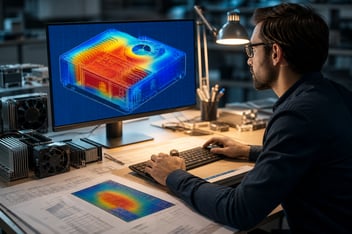
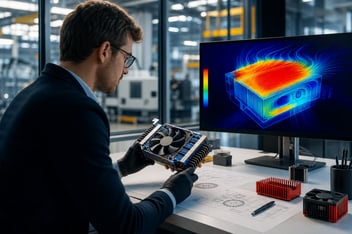
Lighting fails early when thermal design gets treated as a late add-on. Junction temperature, airflow, and enclosure geometry decide whether a fixture holds color, keeps lumen output stable, and survives long enough to meet the spec. In the LED Thermal Management: Junction Temperature, Heat Path & Design Guide, the heat path is described as a system that runs through the LED package, the PCB, and the heat-spreading parts in between. That is the right frame for commercial luminaires, stage gear, and outdoor lighting.
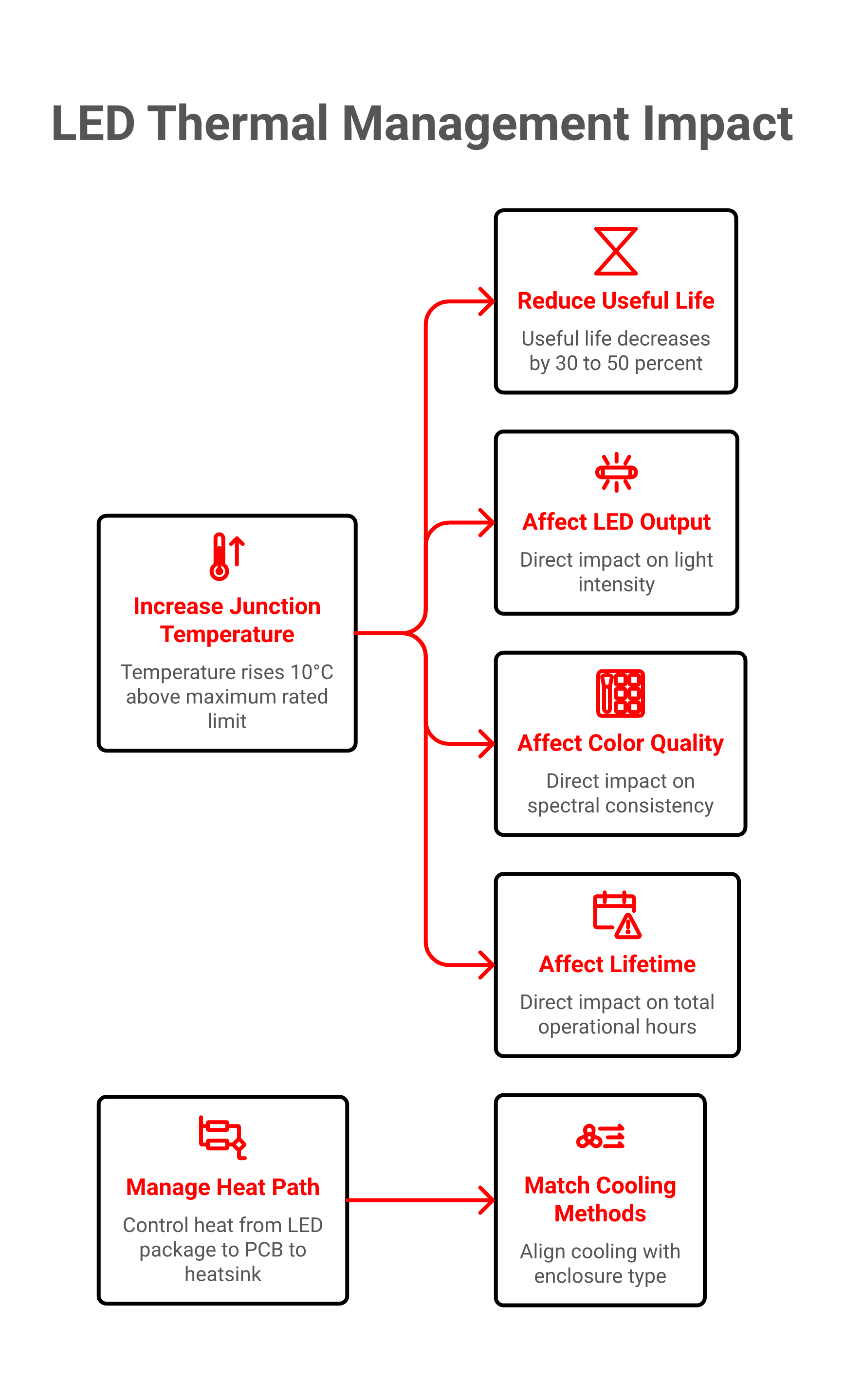
The penalty for getting it wrong is not abstract. Solais Lighting's white paper on active cooling reports a 30 to 50 percent drop in useful life for every 10°C increase beyond the maximum rated junction temperature. It also states that junction temperature is the single most important factor in LED spectral and electrical performance. If the fixture runs hot, the light changes first, then the service life follows.
Table of Contents
- Key Takeaways
- Introduction
- Thermal Path Design in Lighting
- Choosing the Right Cooling Architecture
- Specifying Airflow, Noise, and Control
- Validation, Certification, and Production Readiness
- The Point Where Most Lighting Designs Fail
- FAQ
- About YS Tech USA
Thermal Path Design in Lighting
The first move is to treat the LED, board, and enclosure as one thermal chain. Once you do that, the rest of the design becomes more measurable.
① Set a junction temperature target from the start.
A 10°C rise can cut useful life by 30 to 50 percent, so the target belongs in the initial spec review, not the prototype review. Solais Lighting ties that rise directly to output, color quality, and lifetime.
② Design the heat path as a full stack.
The LED thermal management and heat path guide describes heat movement through the package, circuit board, and heat-sinking parts, which is where many lighting designs lose margin.
③ Size the thermal solution around the enclosure, not the catalog part.
Recessed fixtures have limited air exchange between the fixture housing and the room below, so a good ambient temperature on paper can still leave the housing hot in service.
The common failure point is simple. Teams pick a heatsink or fan before they lock the ambient, airflow, and mounting geometry. Then the fixture passes bench testing and misses in the field.
Choosing the Right Cooling Architecture
Passive, active, and hybrid cooling each work when the thermal load and geometry fit the method. The wrong choice usually comes from assuming surface area alone will solve the problem.
For high-power LEDs, LED professional's review of passive thermal management for high-power LEDs notes that simply increasing heatsink size adds weight and material while delivering only marginal improvement. The article points to heat pipes and vapor chambers as higher-conductivity paths when the interface between source and sink needs help.
That same source gives useful design limits. Typical copper-walled heat pipes are 3 to 8 mm in outer diameter, common lengths run from 4 to 10 inches, and copper-water heat pipes can move heat at up to 50 to 75 W/cm2. It also notes that a properly designed wick structure can move heat about 8 inches against gravity.
A practical lighting design uses that information early. Large fixtures, projection systems, and sealed outdoor housings often need more than a thicker fin stack. They need a controlled path for heat to move away from the LED board without pushing noise, mass, or size beyond the product brief.
Specifying Airflow, Noise, and Control
Airflow matters most when the fixture has little natural exchange, and lighting products often live in exactly that condition. A fan or blower only helps if the static pressure, control method, and housing path fit the application.
Solais Lighting notes that ambient temperature and airflow drive thermal performance, and that recessed fixtures limit exchange with room air. In those cases, low-speed, variable-output cooling can protect the junction without forcing unnecessary noise into the product.
That is where fan selection becomes a thermal decision, not a purchasing decision. Our own lighting work often starts with the target PQ curve, acoustic limit, and PWM control range, then moves into the board-level and enclosure-level checks. YS Tech USA builds AC, DC, and EC fans, plus centrifugal blowers and heatsinks, so the cooling architecture can match the thermal load instead of forcing the load to fit a generic part.
Market data backs the broader direction. The Strategic Market Research report on data center cooling fans values the global market at USD 3.8 billion in 2024 and projects USD 6.4 billion by 2030, a 9.1 percent CAGR. It also reports strong demand for axial fans at 54.6 percent share and DC fans at 41.7 percent share, which reflects the push toward controllable, efficient thermal hardware.
Validation, Certification, and Production Readiness
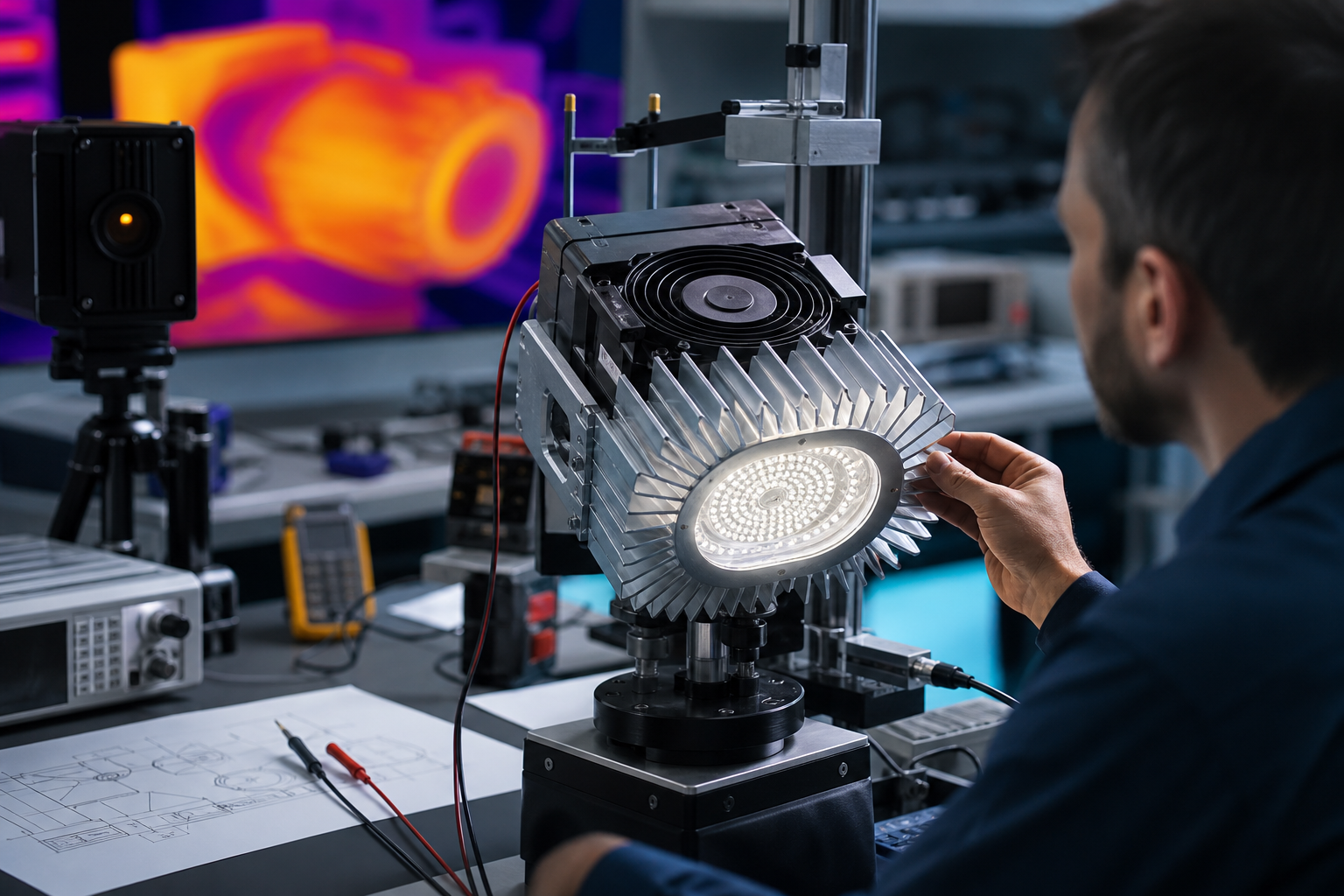
The final design needs proof, not just a clean CAD model. Thermal validation should confirm junction temperature, color stability, airflow path, and acoustic output under the same conditions the fixture will see in production.
Viölumas notes that many LED applications list maximum junction temperatures between 90°C and 120°C, yet designers should target lower than the listed maximum because reaching the manufacturer's limit can cause irreversible damage within seconds. That warning fits lighting systems with sealed housings, outdoor exposure, and high ambient temperatures.
For production, the task is to hold the same thermal behavior across builds. That means locking the fan or heatsink geometry, connector choice, and mounting hardware before qualification starts. It also means planning for UL, Intertek ETL, or SGS work when the fixture moves from engineering sample to field release.
The strongest programs check thermal margin before the design leaves NPI. When that happens, color drift stays lower, lumen output stays more stable, and the fixture does not need a late-stage cooling redesign.
When Lighting Performance Breaks Down
The earliest sign of trouble is usually a small temperature rise that gets ignored. Once the junction temperature moves, color shifts, lumen depreciation, and life loss follow in that order.
That is why lighting thermal design should start with the thermal path, then the cooling method, then the validation plan. If those three pieces are set early, the design team can protect output and reliability without adding unnecessary size or noise.
YS Tech USA makes that process practical with fans, blowers, heatsinks, and engineering support that fit the lighting spec instead of fighting it.
FAQ
Q: Why does junction temperature matter so much in lighting?
A: Junction temperature controls how the LED behaves electrically and optically. Solais Lighting says it is the single most important factor in LED spectral and electrical performance. When it rises, useful life drops, color shifts, and lumen output falls. That is why thermal targets belong in the first design review, not after the prototype is built.
Q: When should a lighting team consider active cooling?
A: Active cooling makes sense when passive mass alone cannot hold the LED at a safe junction temperature. It becomes more likely in recessed fixtures, high-output entertainment lighting, sealed outdoor luminaires, and compact housings. The key is to confirm the airflow path and noise target before selecting a fan or blower. A well-chosen active solution can protect output without adding more material than the enclosure can carry.
Q: Are heat pipes and vapor chambers useful in lighting designs?
A: Yes, especially when the heat source and heat sink are separated by a tight layout or a difficult mounting geometry. The LED professional article on advanced passive thermal management says larger heatsinks often add size and weight with only marginal benefit. Heat pipes and vapor chambers move heat through a higher-conductivity path, which can solve problems that extra fin area cannot. They are most useful when the enclosure is already close to its size limit.
Q: What should be validated before a lighting design goes to production?
A: Validate junction temperature, airflow performance, acoustic output, and color stability under real mounting conditions. Recessed or sealed housings need special attention because room air may have little effect on the fixture interior. It is also smart to confirm the thermal result across operating temperatures, not just in a controlled lab setting. That keeps the design honest before tooling or release.
Q: How does fan selection affect lighting performance?
A: Fan selection affects more than cooling capacity. Static pressure, PWM control, and acoustics all change how well the fixture performs in a real enclosure. A fan that looks good on an airflow chart may underperform once filters, grills, or tight ducts are added. Matching the fan to the full thermal path keeps the lighting system stable and quieter.
About YS Tech USA
YS Tech USA is a premier designer and manufacturer of thermal solutions, specializing in low noise, high-performance DC axial fans, blowers, and heat sink technologies. Located in Huntington Beach, California, we deliver reliable, high-quality products for demanding applications across various industries.
At YS Tech USA, we offer the best of both worlds: the capabilities of a large company with the personalized service of a small one. We collaborate closely with our customers to understand their specific thermal needs and provide customized solutions tailored to their unique requirements.
Our extensive product range includes both modified standard and custom solutions, designed to tackle a wide array of thermal challenges. Whether you need a high-performance fan for a new project or a custom heat sink for an existing application, our team is ready to assist.
With over three decades of industry experience, YS Tech USA has a proven track record of delivering innovative and effective thermal solutions. Contact us today to discover how we can help you address your thermal control challenges.
Author
Charlie Taylor: Charlie is a seasoned industry executive with a demonstrated history of working in the electronics manufacturing industry supporting engineers and buyers with ideas and technical support for fans, blowers and heat sinks.
Read On