Key Takeaways
- Treat thermal design as a launch constraint, not a late-stage fix, because dense electronics leave little margin for error.
- Use application-specific cooling when power density, noise, ingress protection, and reliability all compete in the same enclosure.
- Pull CFD, FEA, and validated airflow data into NPI reviews early to reduce re-spins and avoid schedule slips.
- Match fans, blowers, and heatsinks to the environment, whether that means IP-rated industrial hardware, low-noise medical cooling, or high-temperature lighting designs.
- Ask for engineering support that can move from simulation to samples to production without changing the thermal target midstream.
Introduction
You can ship a product on time and still fail if the thermal plan was weak from the start. Engineers know this because junction temperature does not care about launch dates, and a fan chosen for price alone can turn a clean design into a field problem.
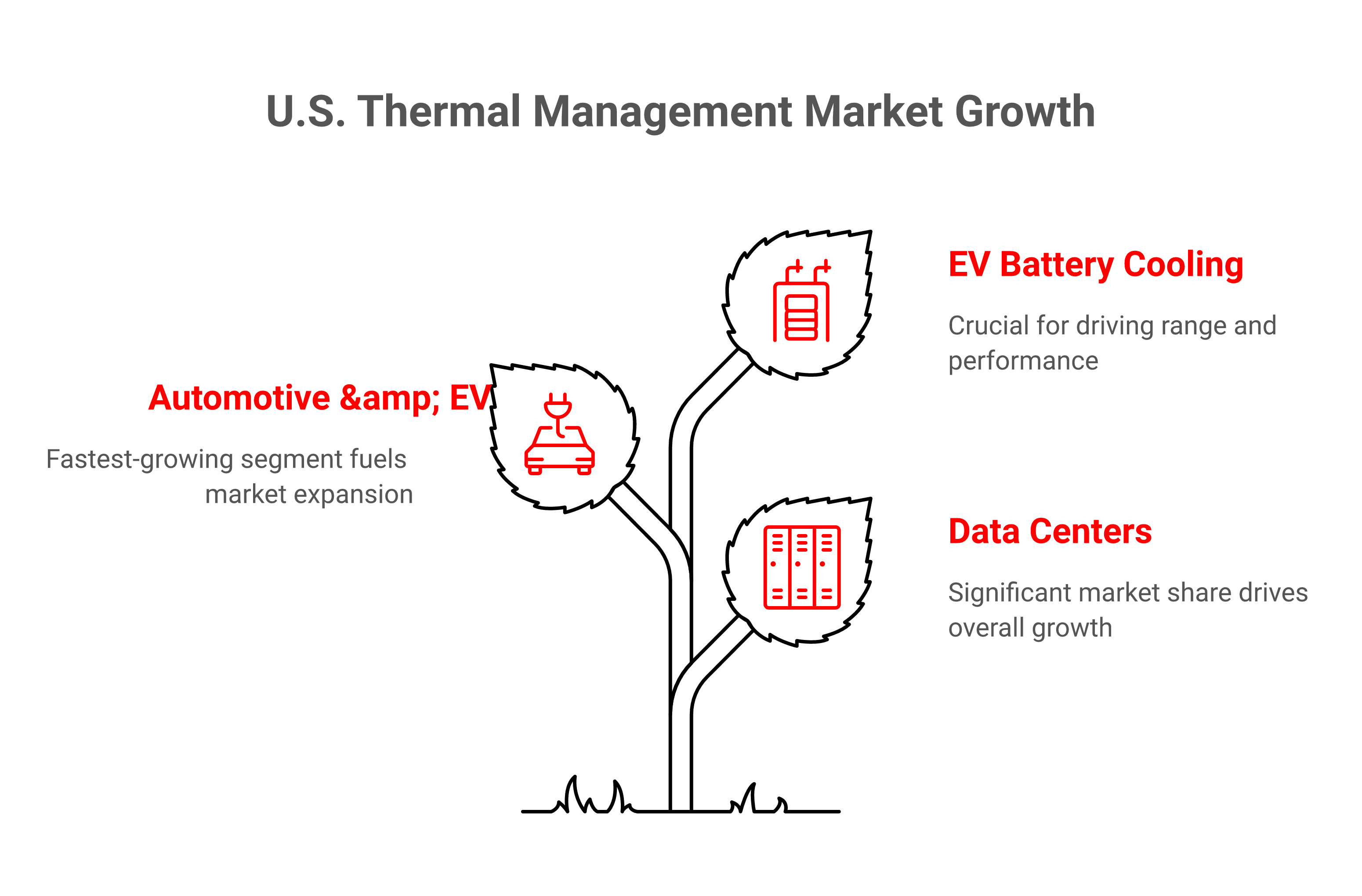
Thermal management is now part of the product definition in automotive, EV charging, medical devices, telecom racks, lighting systems, industrial controls, and energy equipment. Persistence Market Research projects the U.S. Thermal management technologies market at US$5.8 billion in 2026 and US$9.8 billion by 2033, with a 9.4% CAGR, which tells you how much pressure is moving into the design phase. In the same report, data centers and servers account for 30% of market share in 2026, and automotive and EV thermal management is the fastest-growing segment.
That growth is not abstract. The IEA says EV adoption was more than 1 in 10 new cars sold in 2024, and battery cooling systems account for 42.35% of EV thermal revenue in the report cited above, with up to 20% driving range optimization. When the penalty for poor thermal design reaches range, uptime, acoustic noise, or compliance, you stop shopping for a commodity part and start looking for engineering support that can cut rework before it starts.
Table of Contents
- Key Takeaways
- Introduction
- Why thermal design now sets the pace
- Where engineers feel the pressure first
- How custom thermal work reduces re-spins
- What YS Tech USA brings to NPI teams
- Why the product mix matters in real programs
- Launch speed without thermal compromise
- A practical way to choose a thermal partner
- Faster launches start with thermal decisions earlier
Why Thermal Design Now Sets The Pace
Thermal decisions now shape schedule, reliability, and certification from the first concept review. If you wait until prototype bring-up, you usually pay for it in rework, test time, and procurement churn.
The reason is simple. Higher power density leaves less room for error, and more programs are pushing into tighter enclosures with stricter acoustic limits, IP ratings, and temperature classes. A Technavio report cited in the research says the data center precision air conditioning market is expected to grow by USD 1.97 billion at an 11% CAGR from 2025 to 2030, with North America holding 34.5% of forecast growth and in-row cooling valued at USD 1.34 billion in 2024. That is a clear signal that engineered cooling is replacing generic airflow assumptions.
You see the same pattern in liquid cooling. Market.us reports the global data center liquid cooling market at US$4.6 billion in 2025, rising at a 25.3% CAGR through 2035 to about US$43.4 billion. The report also cites global data-center electricity use at roughly 485 TWh in 2025, projected to approach 950 TWh by 2030. When thermal load rises that fast, design teams need parts that already fit the thermal budget instead of parts that force a redesign.
Where Engineers Feel The Pressure First
The first pressure point is almost always the prototype, because the prototype tells the truth. Airflow looks fine on paper until cable routing, board placement, housing geometry, and connector choice change the pressure curve.
In automotive and EV charging, the margin gets even tighter. YS Tech USA lists 85°C, 90°C, and 105°C operating classes, moisture and waterproofing, over-voltage protection, PWM accommodations, specialty connectors, and CAN and LIN bus support for automotive programs. Those are not cosmetic features. They are the details that keep infotainment systems, LED headlights, seat ventilation, and autonomous sensors alive in real duty cycles.
Industrial programs create a different stress profile. Welding, CNC, automation, motor controls, refrigeration, and food service systems often need IP43, IP55, IP56, or IP68 designs, plus validation testing and reliability data. If you have ever watched a sealed enclosure fail because of thermal soak, you know why a high static pressure fan with circuit modifications can be worth more than a cheaper standard part.
Medical And Telecom Need A Different Kind Of Discipline
Medical equipment asks for low current draw, low noise, and long life. The research-backed reason is straightforward. Hospitals do not accept noisy cooling in patient-facing systems, and downtime in patient monitoring or breathing assist equipment is expensive in both money and trust.
The company's medical focus includes design integrity for long life, PWM design and integration, value-add assemblies, document management, compliance data on hand, and stocking programs in California. That kind of support matters when a buyer needs a clean path through NPI, compliance, and supply continuity at the same time.
Telecom is equally unforgiving. A 1U, 2U, or 4U rack can move from acceptable to unstable fast when airflow impedance rises. The research on data center loads explains why, with global data-center electricity consumption expected to approach 950 TWh by 2030 and AI-focused facility power use projected to triple. If the airflow path is wrong, the rack does not care that the platform release is already booked.
How Custom Thermal Work Reduces Re-Spins
Custom thermal work reduces re-spins because it changes the conversation from part selection to system behavior. When the fan curve, heatsink geometry, mounting method, and enclosure constraints are reviewed together, you avoid the late surprises that usually trigger a second design loop.
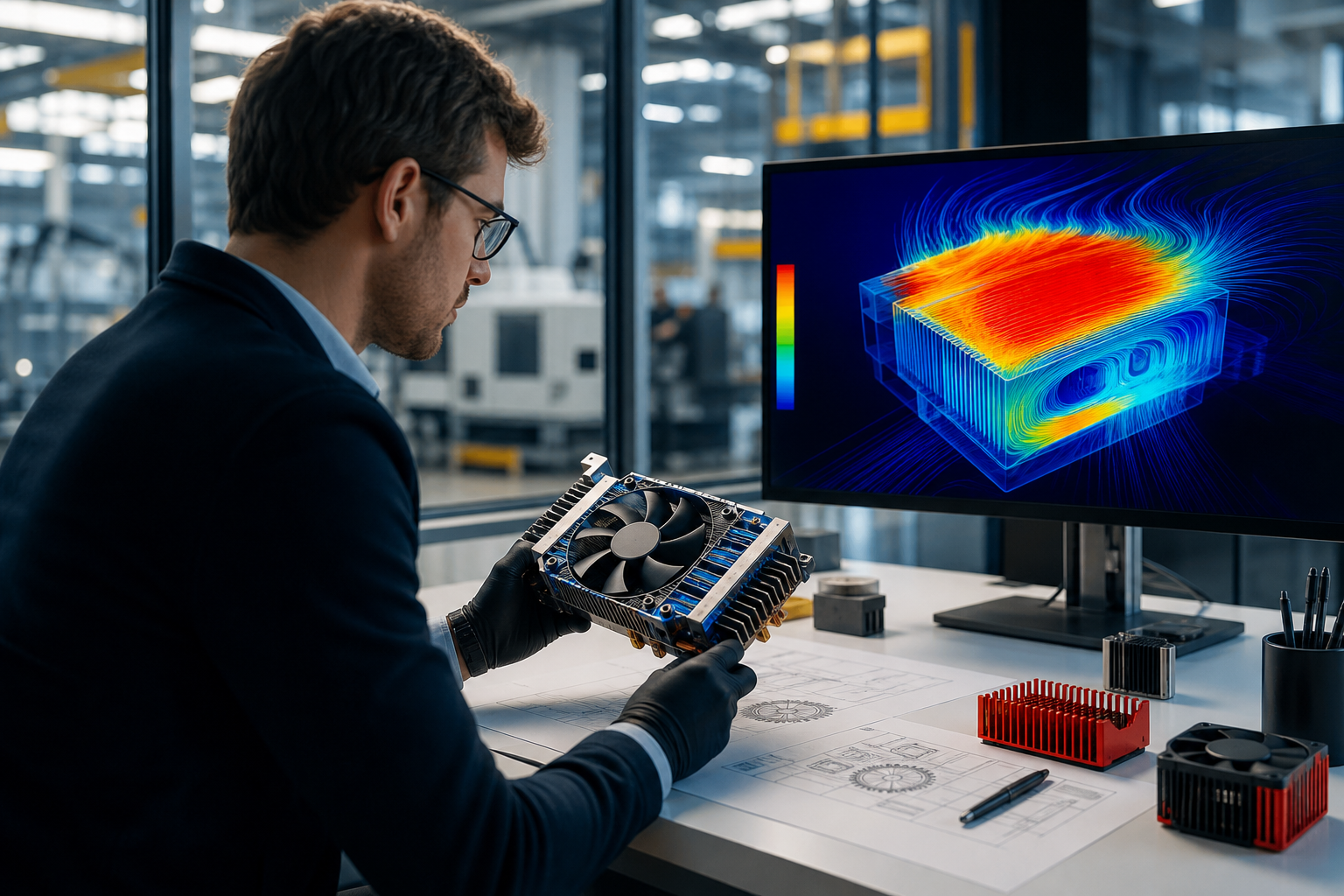
YS Tech USA says its differentiators include CFD, FEA, and thermal simulation, along with form, fit, and function flexibility. That is the right sequence for NPI teams. First you model the airflow path, then you verify the pressure and thermal resistance targets, then you adapt the hardware to the enclosure instead of forcing the enclosure to accept a generic part.
There is a hard economic reason for this approach. The Persistence Market Research figures show the U.S. Thermal management market moving from US$5.8 billion in 2026 to US$9.8 billion by 2033. Markets do not grow that way unless buyers are paying for performance, reliability, and schedule protection. A late thermal fix can consume weeks of mechanical redesign, sourcing changes, and revalidation, while an early thermal review usually changes one fan, one heatsink profile, or one connector detail.
For a useful external reference on how thermal management gets tied to product growth, see this case study on scalable thermal management. It shows the same pattern many engineers already know from experience, which is that cooling belongs in the program plan, not at the end of the drawing review.
What YS Tech USA Brings To NPI Teams
The main value is engineering support that reduces uncertainty before tooling starts. You get a team that can talk about airflow, noise, temperature rise, and application limits in the same meeting, which is how NPI work actually happens.
The company's product range covers AC, DC, and EC fans, centrifugal blowers with EC motor technology, and high-performance heatsinks. That matters because not every program needs the same cooling architecture. A low-noise medical device may need one answer, while an industrial drive, a telecom rack, or an EV charger may need another. The point is not to sell a category. The point is to fit the thermal load, the acoustics, and the mechanical envelope without wasting time.
YS Tech USA also supports automotive and industrial modifications such as PWM integration, circuit changes, Poke-Yoke mechanical upgrades, sealed connectors, silicone tube over lead wires, and specialty testing in production. For a buyer, that shortens the path from prototype intent to production-ready part. For an engineer, it means fewer arguments with the enclosure and fewer compromises at the edge of launch.
You can see the same engineering mindset in the company's 2026 custom thermal design article, which discusses denser power electronics, higher switching frequencies, and the need to treat thermal management as a core discipline. That is a practical view, and it matches what shows up on the bench when junction temperatures run hotter than the first model predicted.
Why The Product Mix Matters
A broad thermal portfolio only helps if it is actually useful in program work. Here, the mix of fans, blowers, EC motors, and heatsinks gives engineering teams room to trade airflow, pressure, noise, and size without starting over.
In lighting and video, for example, the company supports high-temperature designs, outdoor rainproofing, UV resistance, thermal modeling, and certification work with UL, Intertek ETL, and SGS. In power and renewable energy, it supports charge controllers, inverters, battery cooling, and portable power with UV-resistant plastics, IP-rated designs, and multiple bearing options. Those details matter because the cooling system has to survive the environment as well as the electrical load.
If you are comparing thermal approaches in a fast-moving design program, it can help to review the broader industry direction in SunMan Engineering's overview of thermal management and product development. It reinforces a simple point: thermal design now sits inside the product strategy, not outside it.
The Numbers Behind The Pressure
The numbers explain why these programs are under so much strain. The IEA says EVs made up more than 1 in 10 new cars sold in 2024, and battery cooling systems hold 42.35% of EV thermal revenue in the cited report. That combination says the market is moving toward higher thermal complexity, not less.
Data center growth tells the same story. Market.us reports North America held over 27.2% share in the global liquid cooling market in 2025, with US$1.25 billion in revenue. Technavio's data center precision air conditioning forecast adds another layer, since the in-row cooling segment was valued at USD 1.34 billion in 2024 and CRAC units held the largest revenue share that same year. Engineers do not need more generic airflow. They need validated thermal designs that match the enclosure, load, and deployment schedule.
Launch Speed Without Thermal Compromise
You can launch faster when thermal choices are made early, because early decisions are cheaper to change. Once tooling starts, every thermal adjustment gets more expensive, and every week of delay starts to affect procurement, certification, and customer commitments.
This is where simulation and manufacturing support should work together. CFD tells you where heat will move, FEA tells you how the structure will respond, and production experience tells you whether the solution can survive real assembly conditions. That combination cuts the distance between concept and release. It also lowers the chance that a product ships with a thermal margin so thin that a small component change can break it.
The research on data centers is a useful parallel for any dense electronics program. Five major technology companies spent more than USD 400 billion in 2025, and that capex is expected to rise another 75% in 2026, according to the cited report. Spending at that level only happens when thermal performance and deployment speed are both on the line. If your cooling plan cannot survive schedule pressure, it will get replaced by one that can.
A forum like the Europe Data Center Cooling and Thermal Management Forum 2026 exists for the same reason. Thermal managers are no longer dealing with isolated parts. They are dealing with systems that affect uptime, noise, power draw, and launch timing all at once.
A Practical Way To Choose A Thermal Partner
Choose the partner that can prove performance in your use case, not the one with the longest catalog. The right question is whether they can translate your board load, enclosure geometry, acoustic target, and environmental rating into a part you can build and ship.
Start by asking for airflow curves, pressure curves, thermal simulation support, and validation data. Then check whether the supplier can modify a base model, add specialty connectors, support PWM control, document compliance, and keep production practical for your region. That set of answers tells you whether they understand the whole NPI path or just the purchase order.
YS Tech USA says it can support both US and Asia manufacturing, provide value-add assemblies, and keep stock programs and safety stock in California for selected medical applications. That combination is useful when a program needs local responsiveness without giving up production scale. It is also the kind of support that saves schedule when engineering changes arrive after the prototype gate.
The best thermal partner does not wait for your team to discover a hot spot on the bench. It finds the pressure point in simulation, questions the assumption, and gives you a part that can survive the real build.
Faster Launches Start With Thermal Decisions Earlier
If you want a cleaner launch, begin with the heat load, the enclosure, and the operating environment before you lock the mechanical design. That order protects schedule and keeps the thermal target tied to the real product, not to a catalog number selected under pressure.
The market data points in the same direction. U.S. Thermal management demand is headed toward US$9.8 billion by 2033, EV adoption is already above 1 in 10 new cars sold, and data center cooling demand keeps rising with power density and AI workloads. Engineers who wait for thermal issues to appear in prototype builds are already behind.
If your next program needs help with precision thermal design, ask one direct question: can your cooling partner reduce risk before the first build, or are you still going to pay for the fix after the schedule is already set?
FAQ
Q: Why do engineers bring thermal partners in so early?
A: Because thermal choices affect enclosure size, noise, power draw, reliability, and certification before the first build. If the airflow path is wrong, later fixes usually cost more time than the original cooling part. Early review also makes it easier to select the right fan or heatsink before tooling starts. That reduces the chance of a prototype surprise that pushes the launch date.
Q: What makes custom thermal design faster than using a standard fan?
A: Custom work shortens the number of design loops because the part is built around the application, not the other way around. CFD, FEA, and thermal simulation show whether the concept works before you commit to hardware. That lowers re-spin risk and cuts wasted test cycles. It also helps when the enclosure has tight airflow or special connector needs.
Q: Which industries need precision thermal support the most?
A: Automotive, EV charging, medical, telecom, industrial controls, lighting, and renewable energy all face tight thermal limits. Each one has its own mix of temperature, noise, ingress protection, and reliability targets. Data centers and battery systems are especially sensitive because power density keeps rising. The common thread is that the cooling system affects product performance, not just electronics temperature.
Q: What should an NPI engineer ask for during supplier review?
A: Ask for performance curves, validation data, simulation support, and evidence that the supplier can make application-specific changes. You should also check whether they can support your production flow with labels, connectors, and documentation. If the answer stops at a catalog part, the supplier may not be ready for a schedule-critical program. A real NPI partner should be able to talk about both engineering and manufacturing.
Q: How does thermal management affect product reliability?
A: Heat reduces component life when the margin runs out. A device running too hot can age faster, drift out of spec, or fail in the field. That risk grows in sealed enclosures, high-power electronics, and noise-sensitive systems where airflow options are limited. Better thermal design lowers the chance of those failures by keeping temperatures inside the intended operating range.
Q: Why does launch speed depend on cooling design?
A: Because thermal issues often trigger late redesigns. If the cooling system is wrong, mechanical parts, electrical routing, test plans, and sourcing can all change at once. That slows procurement and can push a program back by weeks or months. A validated thermal plan removes one of the biggest causes of late-stage churn.
About YS Tech USA
YS Tech USA is a premier designer and manufacturer of thermal solutions, specializing in low noise, high-performance DC axial fans, blowers, and heat sink technologies. Located in Huntington Beach, California, we deliver reliable, high-quality products for demanding applications across various industries.
At YS Tech USA, we offer the best of both worlds: the capabilities of a large company with the personalized service of a small one. We collaborate closely with our customers to understand their specific thermal needs and provide customized solutions tailored to their unique requirements.
Our extensive product range includes both modified standard and custom solutions, designed to tackle a wide array of thermal challenges. Whether you need a high-performance fan for a new project or a custom heat sink for an existing application, our team is ready to assist.
With over three decades of industry experience, YS Tech USA has a proven track record of delivering innovative and effective thermal solutions. Contact us today to discover how we can help you address your thermal control challenges.
Author
Charlie Taylor: Charlie is a seasoned industry executive with a demonstrated history of working in the electronics manufacturing industry supporting engineers and buyers with ideas and technical support for fans, blowers and heat sinks.
Read On