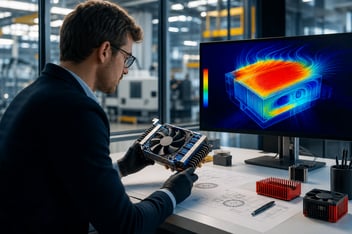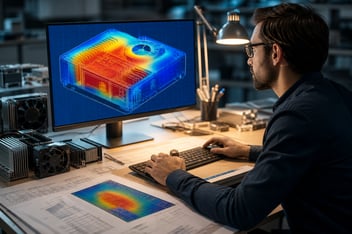

Thermal products can be customized without slowing NPI when you keep the changes small, specific, and tied to a real need. The fastest programs usually change only the parts that affect airflow, noise, sealing, mounting, or compliance. Everything else stays close to the base design.
That approach matters because late thermal changes are rarely small. A connector change, a PWM request, or a sealing update can touch drawings, test plans, lead times, and assembly steps at the same time. In YS Tech USA's 2026 thermal design outlook, the point is clear: devices are smaller, power density is rising, and thermal work has to move early if the schedule is going to hold.
The practical answer is simple. Pick modified standard parts first, define the custom points early, and review those points with engineering before the build starts. That is how you get a product that fits the enclosure, passes test, and still moves through NPI on time.
Table of Contents
- Keep custom changes small
- Lock the thermal spec early
- Use NPI checks before the build
- Choose the right part family
- Protect schedule with simple approvals
- Key Takeaways
- FAQ
- About YS Tech USA
- Get the thermal change right the first time
Keep Custom Changes Small
Small changes are easier to approve, easier to test, and easier to build again if the first run needs a correction. The safest path is to customize only the details that affect the thermal result, such as connector type, wire length, PWM behavior, bearing choice, mounting holes, labels, or sealing. Everything else should stay as close to the base part as possible.
That is also where the schedule stays protected. Nielsen Norman Group recommends keeping customization simple, easy to find, and easy to edit, and the same logic fits thermal products. If the change is visible, limited, and tied to a reason, it is far less likely to create a draw-out review cycle.
- Keep the change list short so engineering, purchasing, and manufacturing can review it in one pass.
- Use a base fan or heatsink family first, then adjust only the features that affect fit, airflow, sealing, or control.
- Ask for the change in plain language so the factory can quote it, build it, and test it without guessing.
YS Tech USA makes this easier with modified standard options, flexible manufacturing lines, and support for specialty connectors, PWM accommodations, and mechanical changes. That gives NPI teams a way to stay close to the catalog while still meeting the build needs of the program.
Lock The Thermal Spec Early
A thermal change gets risky when the target is vague. If you do not define temperature class, airflow target, acoustic limit, IP rating, or control method early, the part will keep changing after reviews start. A structured NPI process is built to prevent that kind of drift.
ABLCircuits notes that "the difference between a smooth launch and a three-month delay is often a 30-second phone call," and that some complex NPI programs need "eight weeks" just for the right front-end work. Queen EMS says a structured NPI PCB assembly process "typically spans 6 to 10 weeks" and can prevent "80% of volume manufacturing failures." Those numbers are a good reminder that early clarity is cheaper than late correction.
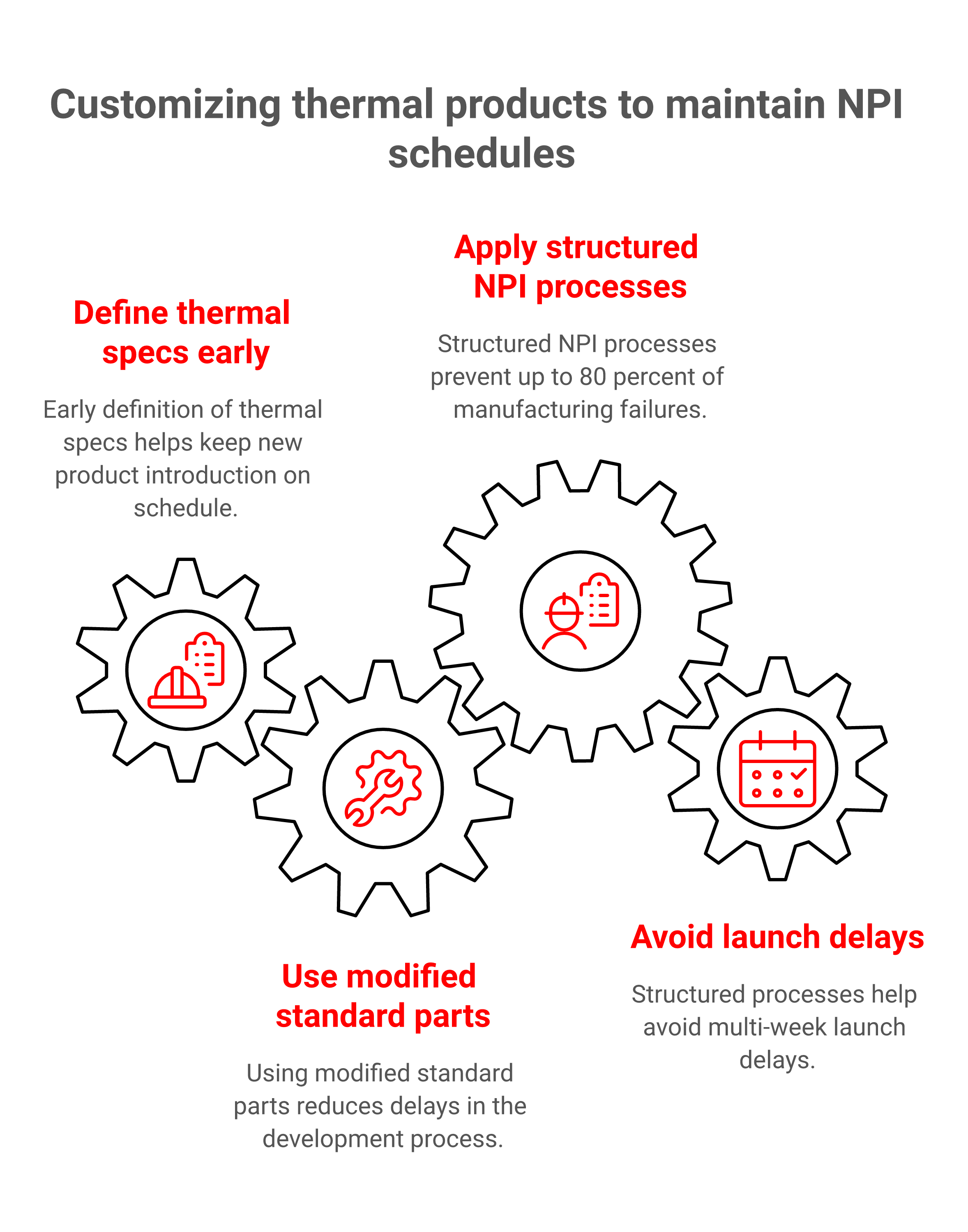
- Define the operating range before you ask for a custom part, especially in automotive and industrial programs that use 85°C, 90°C, or 105°C targets.
- State the control method, such as PWM, CAN, or LIN, before the drawing goes to sourcing.
- Put sealing, noise, and mounting needs on the first release so the supplier does not build the wrong version.
YS Tech USA supports those early calls with CFD, FEA, and thermal simulation, so the design choice is based on measured need rather than guesswork. That reduces re-spins and gives buyers a cleaner quote path.
Use NPI Checks Before The Build
NPI gets slower when thermal review happens after the build is already scheduled. The cleanest process is to treat thermal customization as part of DFM, not as a side request after the BOM is frozen. That means the fan, blower, or heatsink is checked against the enclosure, the power map, and the assembly method before release.
Foxtronics EMS says DFM reviews should explicitly evaluate thermal management alongside component placement, solderability, and production efficiency. That is the right order. If the thermal part cannot be installed, wired, sealed, or tested in the line flow, it is not ready.
- Review mounting access, lead-wire routing, and connector fit before pilot build, not after the first assembly pass.
- Check whether the thermal part needs label changes, special packaging, or test notes for production.
- Confirm that the selected fan or heatsink still works with the final enclosure, not just the CAD model.
A useful benchmark is the cost of missing the front end. Queen EMS cites average late-stage re-spin savings of $28,000 when pilot runs and early DFM reviews are used, and it also says missing centroid data can add 4 to 8 weeks. Thermal work has the same pattern. One missed detail can hold the line longer than the change itself should take.
Choose The Right Part Family
The fastest custom job often starts with the right standard family. If the enclosure needs high static pressure, the answer may be a different fan frame or blade profile. If the unit needs sealing or rough-environment use, the answer may be an IP-rated version instead of a one-off design.
That is why it helps to work from a complete thermal range, not a single part number. A family with AC, DC, and EC options, plus blowers and heatsinks, gives engineers room to match the product to the load without starting from zero. In YS Tech USA's 2026 thermal design article, the company describes a future that is "simulation-led, vertically tuned, and production-ready," which is exactly the kind of structure that keeps custom work moving.
- Match the thermal part to the real load first, then decide whether a modified standard item is enough.
- Pick bearing type, voltage, wire style, and connector type as controlled options instead of separate projects.
- Use IP, temperature class, and noise targets to narrow the part family before drawing a custom new part.
YS Tech USA covers this well with AC, DC, and EC fans, centrifugal blowers, and high-performance heatsinks. That mix lets NPI teams stay in one supply path while still making the product fit the application.
Protect Schedule With Simple Approvals
Schedule protection usually comes from fewer approvals, not more meetings. The best process gives engineering enough control to approve the custom points once, then freezes those points before the build. That prevents the same change from being rechecked by every team.
Ricardo's NPI guide says NPI is used to reduce risk, lower development cost, improve production speed, and save money. It also lists lower production cost, higher quality products, and easier scale-up as direct benefits. Those benefits only show up when the custom request is locked early and owned by one clear review path.
- Keep one approval list for the thermal change so engineering, quality, and purchasing are not asking for different versions.
- Use a small set of approved custom options, such as connectors, labels, sealing, and PWM setup.
- Move the decision to the front of the schedule so procurement can quote the right part the first time.
This is also where simple documentation pays off. A clear drawing, a short change note, and a defined test plan often save more time than another design meeting. The goal is not more process. The goal is fewer surprises.
Key Takeaways
- Keep thermal customization to the few features that change fit, airflow, noise, sealing, or control.
- Lock the spec early, because late changes can add weeks and force rework.
- Use DFM and pilot reviews before build release so the custom part fits the line.
- Start with a standard part family when possible, then change only the needed options.
- Give one team ownership of the custom approval path so the schedule does not stall.
FAQ
Q: What thermal customizations are usually safe for NPI schedules?
A: Connector changes, lead-wire length, PWM tuning, bearing selection, mounting changes, labels, and sealing updates are usually the easiest to manage. These changes are specific, visible, and easier to test than a full redesign. They also let engineering keep most of the base part unchanged, which protects lead time. The key is to define them early and keep the list short.
Q: When should thermal customization be decided?
A: It should be decided before the first serious NPI review, not after prototype issues start. Early decisions keep the drawing, test plan, and supply path pointed at the same part. That is how you avoid a design that keeps changing every time another group sees it. The earlier the change is locked, the easier it is to quote and build.
Q: Why do late thermal changes delay launches so often?
A: Because one thermal change usually touches more than one team. It can affect the enclosure, the wiring, the assembly method, the test fixture, and the compliance file. ABLCircuits says even a brief delay in early contact can shift a launch by months in complex cases. That is why thermal work belongs in the first review cycle.
Q: How do I know whether to choose a custom part or a modified standard part?
A: Start with the smallest change that still solves the thermal need. If a standard fan or heatsink can meet the airflow, noise, and sealing target with a connector or mounting change, that is usually the better path. A full custom part makes sense when the fit or performance need cannot be met any other way. The test is whether the change solves a real requirement, not whether it looks more tailored.
Q: What should be in the first thermal review package?
A: Include the enclosure limits, target temperature class, airflow or pressure need, control method, noise target, sealing need, and any special connector or label request. If the program has compliance or harsh-environment rules, include those too. That gives engineering one clear picture of the job before quoting starts. It also reduces the chance of a second round of questions that eats schedule.
About YS Tech USA
YS Tech USA is a premier designer and manufacturer of thermal solutions, specializing in low noise, high-performance DC axial fans, blowers, and heat sink technologies. Located in Huntington Beach, California, we deliver reliable, high-quality products for demanding applications across various industries.
At YS Tech USA, we offer the best of both worlds: the capabilities of a large company with the personalized service of a small one. We collaborate closely with our customers to understand their specific thermal needs and provide customized solutions tailored to their unique requirements.
Our extensive product range includes both modified standard and custom solutions, designed to tackle a wide array of thermal challenges. Whether you need a high-performance fan for a new project or a custom heat sink for an existing application, our team is ready to assist.
With over three decades of industry experience, YS Tech USA has a proven track record of delivering innovative and effective thermal solutions. Contact us today to discover how we can help you address your thermal control challenges.
Get The Thermal Change Right Early
The best NPI programs make custom thermal work look simple because the hard decisions were made early. That keeps the build moving, the risk lower, and the handoff cleaner for every team involved.
When the part is chosen with the schedule in mind, you get less rework and fewer surprises at pilot build. You also get a thermal solution that fits the product instead of fighting it. Would your next program move faster if the custom changes were decided before the first prototype was built?
| Section | Plain summary | Action for Mechanical engineer, thermal engineer |
|---|---|---|
| Keep custom changes small | Small thermal changes are faster to approve and easier to build. | Limit the change list to the few details that affect fit, airflow, noise, sealing, or control. |
| Lock the thermal spec early | Early definition keeps the design from drifting. | Set temperature, airflow, noise, sealing, and control targets before the build starts. |
| Use NPI checks before the build | DFM and pilot checks catch thermal issues before they slow the line. | Review mounting, wiring, labeling, and test needs before release. |
| Choose the right part family | A good base fan or heatsink reduces custom work. | Start with the closest standard family, then change only the needed options. |
| Protect schedule with simple approvals | One clear approval path keeps custom work moving. | Use one review list and one owner for the thermal change. |
Author
Charlie Taylor: Charlie is a seasoned industry executive with a demonstrated history of working in the electronics manufacturing industry supporting engineers and buyers with ideas and technical support for fans, blowers and heat sinks.
Read On