
Centrifugal Blowers vs. Axial Fans for EV Charging Stations: Which Offers Better Thermal Management?
Centrifugal Blowers vs. Axial Fans for EV Charging Stations: Which Offers Better Thermal Management?
7:47
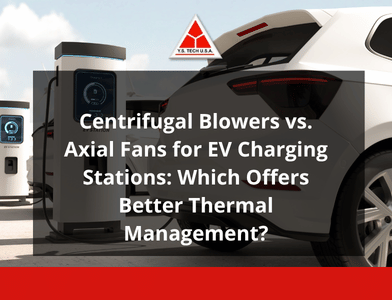
Is your EV charging station running hot and underperforming? The key might lie in your choice of cooling system.
As electric vehicles (EVs) surge in popularity, the infrastructure to support them must evolve too. At the heart of this setup lies effective thermal management, crucial for maintaining the integrity and efficiency of EV charging stations. Two major players in this field are centrifugal blowers and axial fans. Today, we'll explore which offers the best thermal management for these charging hubs, dissecting their capabilities based on key performance criteria.
Picture a jet engine. That's a simplified version of how axial fans work-they pull air parallel to their axis, pushing large volumes over long distances. Ideal in situations where space is scarce but airflow needs are high, axial fans are the go-to for wide-open spaces that suffer from heat buildup. Companies like SameSky Devices highlight their efficiency in moving high volumes of air with minimal pressure.
Centrifugal blowers take a different approach, expelling air at a right angle from the intake. Think of it as a high-pressure air pump. These blowers excel in scenarios requiring airflow through ductwork or setups that present resistance. Longwell Fans points out their strength in generating higher pressure, a critical feature when dealing with complex ventilation systems.
Performance Criteria for EV Charging Stations Airflow and Pressure Requirements: Axial Fans When it comes to moving air efficiently over large surfaces, axial fans take the crown. Their ability to deliver high-volume airflow is unmatched, making them perfect for cooling vast areas. For EV stations with a straightforward layout, they perform admirably in dissipating the generated heat.
Airflow and Pressure Requirements: Centrifugal Blowers Contrast that with centrifugal blowers, which thrive in high-resistance environments. If your station's layout includes intricate ductwork, these blowers might just be your best bet. Their high-pressure airflow capability ensures that even the most stubborn heat pockets are dealt with effectively.
Noise Levels: Axial Fans Urban and residential settings demand discretion, and here, axial fans hold an upper hand. Operating at lower pressures and speeds, they are notably quieter, ensuring peace for the surrounding community. Reddit discussions often highlight them as the less intrusive option for noise-sensitive zones.
Noise Levels: Centrifugal Blowers Centrifugal blowers, though powerful, come with a noise trade-off. Their high-pressure operation means they can be louder, a potential drawback in settings where noise pollution is a concern.
Energy Efficiency: Axial Fans Energy efficiency isn't just a buzzword-it's a financial imperative. Axial fans, with their simpler design, consume less power. This translates to lower operating costs and a smaller carbon footprint, a significant consideration for eco-conscious operations.
Energy Efficiency: Centrifugal Blowers While centrifugal blowers offer superior pressure, they do so at a cost: higher energy consumption. Their intricate design and operational demands might lead to heftier power bills, a factor worth pondering if sustainability is a priority.
Installation and Maintenance: Axial Fans Low maintenance and easy installation are where axial fans shine. Their straightforward design means less downtime and fewer headaches when setup or service is needed. Pelonis Technologies often touts their simplicity as a major advantage.
Installation and Maintenance: Centrifugal Blowers Centrifugal blowers, with their complex mechanisms, require a bit more love and care. Installation can be more involved, and regular maintenance checks are necessary to keep them running smoothly. ACDC EC Fan notes that this complexity can sometimes be a deal-breaker for those seeking plug-and-play solutions.
Choosing between centrifugal blowers and axial fans for your EV charging station boils down to understanding your specific needs. Axial fans offer a quieter, more energy-efficient solution for straightforward setups, while centrifugal blowers are the champions in high-resistance environments. As the demand for EV infrastructure expands, the right thermal management choice will keep your charging stations efficient, reliable, and economical.
Which cooling option aligns with your station's needs? Are you prioritizing noise reduction or airflow efficiency? Lastly, how will energy consumption influence your decision?
Q: What is the primary difference between centrifugal blowers and axial fans?
A: The main difference lies in airflow direction and pressure generation. Axial fans draw air parallel to the axis, moving large volumes over long distances, while centrifugal blowers expel air at a 90-degree angle, generating higher pressure airflow suitable for systems with high resistance.
Q: When should I opt for axial fans in an EV charging station?
A: Axial fans are ideal for environments that require high-volume airflow with lower pressure, such as open spaces with minimal ductwork. They are also preferable if noise and energy efficiency are major concerns, as they tend to operate more quietly and consume less power.
Q: In what scenarios are centrifugal blowers more effective?
A: Centrifugal blowers are better suited for applications where high-pressure airflow is needed, particularly when dealing with complex duct systems or areas with significant resistance. They are more effective in ensuring adequate cooling in such challenging setups.
Q: How do noise levels compare between the two types of cooling solutions?
A: Generally, axial fans produce less noise than centrifugal blowers due to their lower operational pressures and speeds. This makes axial fans a better choice for EV charging stations located in noise-sensitive areas, such as urban or residential zones.
Q: Which cooling solution is more energy-efficient?
A: Axial fans are typically more energy-efficient because of their simpler design and lower power requirements. This can lead to reduced operating costs and a smaller carbon footprint, which is important for sustainable operation of EV charging stations.
Q: What factors should be considered for installation and maintenance?
A: Axial fans are generally easier to install and maintain due to their straightforward design. In contrast, centrifugal blowers might require more complex installation procedures and frequent maintenance due to their intricate design and higher operational pressures.
Q: How do I choose the right cooling solution for my EV charging station?
A: The choice depends on specific operational requirements such as airflow needs, noise sensitivity, energy efficiency, and maintenance capabilities. Consider your station's design, environmental conditions, and performance goals to determine whether axial fans or centrifugal blowers are more suitable for your needs.
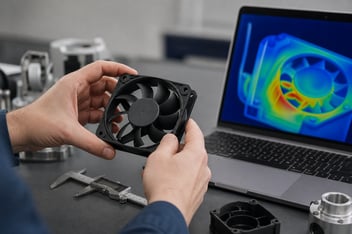
Most delays in custom fan prototyping have nothing to do with how fast a supplier can actually...
If you're specifying a fan for an industrial, medical, telecom, or power electronics application,...

Ask ten OEM procurement teams which AC axial fan supplier is "best" and most will answer with a...