
- YS TECH USA Inc blog
- Thermal Management,
- Axial Fan Selection,
- Industrial Cooling Fans,
- Equipment Cooling,
- AC Axial Fans for Machinery Cooling,
- Machinery Cooling Systems,
- AC Fan Specifications
- Why AC Axial Fan Selection Is Hard for Machinery Cooling
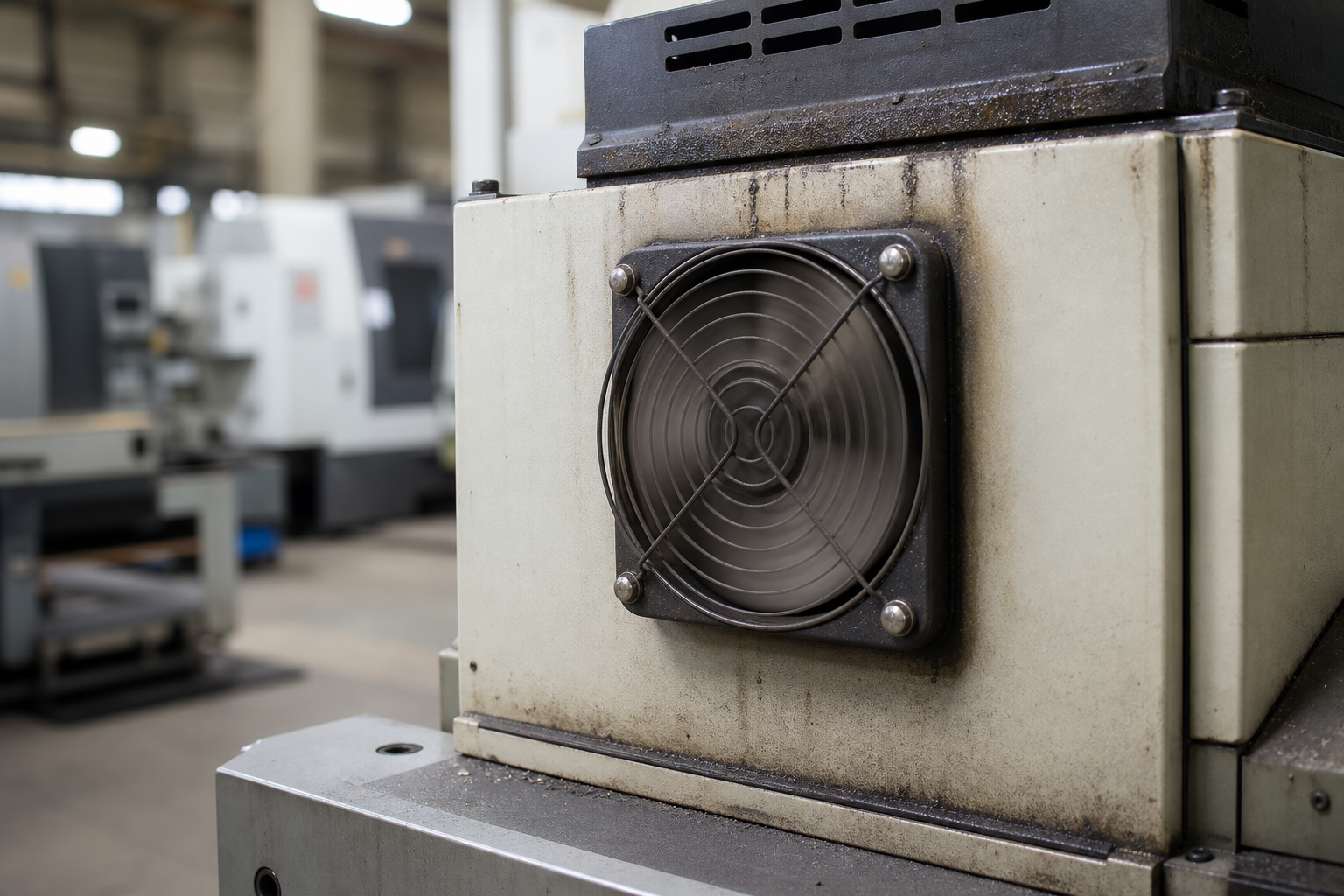
Ask an engineer why AC axial fan selection is hard and most will point to one number, usually CFM or noise. In practice it's harder than that, because none of the variables that matter move independently. Push one up and at least one other moves against you, and machinery cooling adds constraints that a typical electronics enclosure never has to deal with in the first place.
This is a rundown of what actually makes the decision difficult, and how to work through it without defaulting to "biggest fan that fits."
The core variables don't move independently
Airflow and static pressure trade off against each other for any given fan, so a fan optimized for open-air CFM can underperform badly once it's installed behind a guard, filter, or tightly packed housing. Higher airflow generally means more noise, and a fan built for a higher duty cycle at higher speed usually shortens bearing life unless the bearing type is upgraded to handle it. There's no single "best" fan in the abstract. There's only a best fan for a specific combination of heat load, space, noise tolerance, and environment, and machinery cooling tends to push several of those at once.
For the airflow and static pressure calculation specifically, see Airflow and Static Pressure for AC Axial Fans.
Machinery adds constraints electronics enclosures don't have
A fan cooling a control cabinet in a clean room and a fan cooling a motor drive on a production floor are solving very different problems even if their CFM requirement looks similar on paper.
Vibration and shock. Machinery vibrates continuously, and that vibration transmits into whatever's mounted to it, including the cooling fan. Sleeve-bearing fans tend to wear unevenly under sustained vibration because the bearing surface loses its lubricant film unevenly, while ball-bearing fans generally handle continuous radial loading better. This is on top of the heat-driven bearing wear covered in understanding fan bearings, not instead of it. A fan spec'd only for thermal duty cycle without accounting for mechanical vibration is a common failure mode on the shop floor.
Contamination. Oil mist, coolant spray, and metal particulate are routine around production machinery in a way they're not in a server room or a sealed electronics cabinet. IP rating matters here for the same reason it matters outdoors, but the contaminant is different, and shaft seals and housing design matter as much as the IP number itself.
Elevated ambient. The machinery itself is often already a heat source before the fan does anything, which means the enclosure's baseline ambient temperature is higher than "room temperature," and the fan's real thermal margin is smaller than a datasheet calculation assumes if that's not accounted for.
Noise is a real constraint, not an afterthought
On a factory floor with multiple machines running fans simultaneously, cumulative noise adds up in a way a single fan's dB rating doesn't show. A fan that seems reasonably quiet in isolation can meaningfully raise ambient noise levels once it's one of a dozen identical units running near workstations. Where operators work in close proximity to the equipment, noise limits can end up being the deciding constraint even when airflow requirements would allow for a louder, higher-CFM fan.
Fit and mounting constrain your options before performance does
In a lot of machinery cooling projects, the available depth, diameter, and mounting orientation were fixed by the equipment design long before anyone got to the fan selection stage. A retrofit onto existing machinery is even more constrained, since the fan has to match an existing cutout and mounting pattern. That physical envelope often rules out higher-performance options before airflow or noise is even part of the conversation, which is why fit needs to be confirmed early rather than treated as a final check.
Why "good enough" selection creates downstream costs
Underspeccing any one of these variables tends to show up later as a support cost rather than an upfront one: a bearing that fails early under vibration, a fan that can't hold its rated airflow once dust builds up on a filter, or a noise complaint that forces a rework after the equipment's already in service. On production equipment specifically, a failed cooling fan can mean unplanned downtime on a line, not just a support ticket, which changes the cost calculus considerably compared to a desktop electronics application.
See extending equipment lifespan with the right fan technology for more on how fan choice affects total cost of ownership over the equipment's service life.
A practical framework for evaluating options
Work through these in order rather than starting with a catalog and narrowing down by CFM alone.
Heat load and static pressure. Calculate required airflow from actual heat dissipation and allowable temperature rise, then check that number against the fan's PQ curve at your system's expected static pressure, not its open-air rating. See Airflow and Static Pressure for AC Axial Fans for the full calculation.
Noise limit for the space. Set a maximum dB target based on where the equipment operates and how many units will run simultaneously, not just a single fan's isolated rating.
Environment and bearing type. Match IP rating to the actual contaminants present, not just "outdoor" or "indoor," and treat bearing type as a mechanical-durability spec given both heat and vibration.
Physical footprint and mounting. Confirm depth, diameter, and mounting pattern against the equipment design before comparing performance specs across candidates.
Voltage and AC vs. DC fit. Confirm the fan matches your equipment's electrical design; see DC Fan vs AC Fan: 6 Key Differences Explained if that decision hasn't already been made.
Once those five are pinned down, the shortlist of viable fans is usually much shorter than the full catalog, and choosing among what's left is a much easier decision. See Best AC Axial Fans for High-Heat Equipment for specific models across a range of these tradeoffs, all part of YS Tech USA's industrial AC fan line.
Frequently asked questions
Why is choosing an AC axial fan for machinery cooling harder than for a typical electronics enclosure?
Machinery cooling adds constraints a sealed electronics enclosure doesn't have, including continuous vibration, contamination from oil or coolant, and an ambient temperature that's already elevated by the machinery itself. All of these interact with the same airflow, static pressure, and noise tradeoffs that apply to any fan selection, which is why the decision is harder in practice than matching a single CFM number.
Does vibration from machinery affect fan bearing choice?
Yes. Sustained vibration tends to wear sleeve bearings unevenly because it disrupts the lubricant film they depend on, while ball bearings generally hold up better under continuous radial loading. Bearing selection for machinery-mounted fans needs to account for mechanical vibration in addition to the heat-driven wear that applies to any high-temperature application.
How much does noise matter when choosing a cooling fan for industrial machinery?
It matters more than a single fan's dB rating suggests, because noise from multiple identical fans running simultaneously on a production floor is cumulative. Where operators work near the equipment, noise limits can end up being the deciding constraint even when airflow requirements would otherwise allow for a louder, higher-CFM fan.
What environmental factors affect AC axial fan selection in machinery applications?
The main factors are contamination from oil mist, coolant, or metal particulate, which affects IP rating and seal requirements, and elevated ambient temperature caused by the machinery itself, which reduces the fan's real thermal margin compared to a room-temperature datasheet calculation.
What's the biggest mistake engineers make when selecting a cooling fan for machinery?
Selecting primarily on open-air CFM without accounting for static pressure, vibration-driven bearing wear, and the equipment's real ambient temperature. Fans sized this way often meet their rated performance in testing but underperform or fail early once installed on the actual machinery.
Read On

Best AC Axial Fan Suppliers Compared for OEMs
Ask ten OEM procurement teams which AC axial fan supplier is "best" and most will answer with a...
Airflow and Static Pressure for AC Axial Fans
Most fan sizing mistakes don't come from picking a bad fan. They come from sizing a fan using only...
Best AC Axial Fans for High-Heat Equipment
Not every AC axial fan built for a hot enclosure is actually built for a hot enclosure. Plenty of...